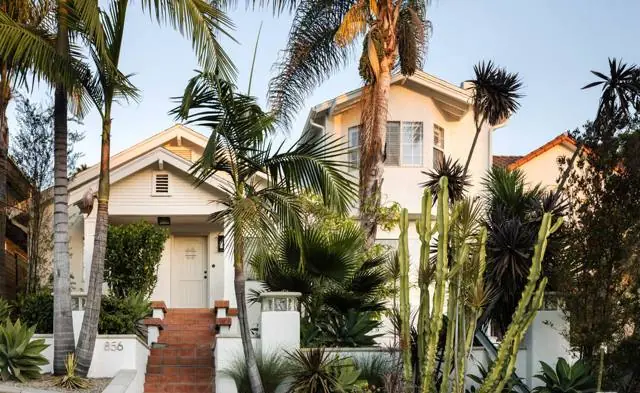
Interior painting in Los Angeles costs about $3 to $7 per square foot of floor area in 2026, so a 1,500 square foot house runs roughly $5,000 to $10,000 for walls, ceilings and trim. A single room is $400 to $900. Exterior painting on a 1,500 square foot stucco house is $6,000 to $14,000, and $12,000 to $30,000 on a wood-sided or Victorian house where the prep is the job. Prep, not paint, is where the money and the difference in result sit.
- Interior, per sq ft of floor
- $3 to $7Walls, ceilings and trim
- 1,500 sq ft house, interior
- $5,000 to $10,000Whole house, two coats
- Exterior, 1,500 sq ft stucco
- $6,000 to $14,000Including patching and primer
- Lead-safe prep, pre-1978
- Adds $1,500 to $6,000Not optional
What it costs
| What | Typical Los Angeles range | Notes |
|---|---|---|
| Single bedroom, walls only | $400 to $700 | Two coats, minor patching |
| Single room, walls, ceiling and trim | $600 to $1,100 | The usual room scope |
| Interior, 1,500 sq ft house | $5,000 to $10,000 | Walls, ceilings, trim, doors |
| Interior, 3,000 sq ft house | $9,000 to $18,000 | Same scope, more of it |
| Ceilings only, whole house | $1,500 to $4,000 | Flat white, includes popcorn patching |
| Cabinet refinishing, sprayed | $3,000 to $8,000 | Per kitchen, lacquer or conversion varnish |
| Exterior, 1,500 sq ft stucco | $6,000 to $14,000 | Patch, prime, two coats |
| Exterior, wood siding with real prep | $12,000 to $30,000 | Scrape, repair, prime, two coats |
| Smooth-wall skim coat, per room | $1,200 to $3,000 | Before paint, if you want flat walls |
| Lead-safe containment, pre-1978 | $1,500 to $6,000 added | Certified crew, HEPA, containment |
Why two quotes for the same house differ by double
Almost always, it is prep. Paint and labour to roll it on are a commodity, and two crews will be within fifteen percent of each other on that part. What separates a $6,000 quote from a $13,000 quote on the same house is how much of the following is in it: filling and sanding every nail hole and crack, caulking every trim joint, priming every patch, scraping and feathering failing exterior paint instead of painting over it, and masking properly instead of wiping drips off the floor afterwards.
The cheap quote is not dishonest, it is a different job. It will look good for eighteen months. The expensive one looks good for eight years. Ask any painter to write down the prep steps, not just the number of coats, and the two quotes become comparable.
Two coats is not a spec
Two coats of the wrong product over an unprimed patch looks worse than one coat of the right one. What matters is whether patches are spot-primed, whether a colour change goes over a tinted primer, and whether the sheen is right for the surface. We write the product, the primer and the sheen into the scope so you are comparing like for like.
What costs more than people expect
- Dark colours and strong reds, which need an extra coat and sometimes a tinted primer
- High ceilings and stairwells, which need scaffolding rather than a ladder
- Trim-heavy period houses, where the trim takes longer than all the walls combined
- Popcorn or heavy-texture ceilings, which need patching or skim coating before they take paint evenly
- Smooth-wall finishes, which are a plastering job priced separately from the paint
- Exterior wood that has been painted over without scraping for thirty years
- Anything pre-1978, where lead-safe practices change the crew and the containment
Lead paint on a pre-1978 house
Every house in Los Angeles built before 1978 is presumed to contain lead-based paint, and most of the older housing stock in Hancock Park, Highland Park, Larchmont, Atwater Village and the pre-war Westside does. Work that disturbs painted surfaces in those houses falls under the federal Renovation, Repair and Painting rule, which means a certified firm, containment of the work area, HEPA vacuuming and a specific cleaning verification at the end.
This is where a lot of cheap exterior quotes come from: dry-scraping or power-washing old exterior paint off a pre-1978 house is both the fastest way to prep it and a direct violation, because it puts lead dust into the soil and the neighbour's yard. We do it the required way and we price it that way, and the line is visible in the proposal rather than buried.
Interior is usually easier than exterior
On the interior, lead paint is most often found on window sashes, door jambs and trim, the friction surfaces. Walls that have been repainted several times are usually fine to sand lightly under containment. The exterior is where the real exposure is, because of the volume of material coming off.
When painting is the wrong purchase
If stucco is cracked in a pattern that follows the framing, or if exterior paint is failing in sheets rather than flaking, paint is not the fix. Water is getting in from somewhere, usually a roof edge, a window flashing or a failed deck membrane, and painting over it hides the evidence for a season. We say so rather than taking the paint job.
The same applies inside. Peeling paint in a bathroom ceiling means the ventilation is wrong or there is a leak above. Bubbling at a baseboard means moisture in the slab or the wall. Those are cheap to find and expensive to ignore.
Los Angeles County figures, reviewed 2026-10-29 by America General Contractors, California contractor licence CSLB 1083262. Planning ranges, not a quote, and not legal advice. We confirm the current rules for your parcel before anything is drawn.
Questions
How long does painting a whole house take?
Interior on a 1,500 square foot house is three to five days with a crew of three, including prep. Exterior on the same house is four to seven days for stucco, and two to three weeks for wood siding that needs real scraping and repair. Weather is the variable on exteriors: we do not paint stucco that is still wet from the morning.
Do I need to move out?
No. We work room by room, seal off the work area and keep one bathroom and the kitchen usable throughout. The one exception is a sprayed-finish job on a whole interior, where the overspray and solvent smell make two or three nights elsewhere much more pleasant.
Is spraying better than rolling?
For cabinets, doors and trim, spraying gives a finish rolling cannot match, and it is what we do. For walls, a sprayed and back-rolled wall and a well-rolled wall look the same once dry, and rolling needs far less masking. Anyone who insists on spraying your walls is saving labour, not improving the result.
How often does a house in Los Angeles need repainting?
Interiors, seven to ten years, longer in rooms that get little sun. Stucco exteriors, eight to twelve years. South and west elevations fail first, sometimes twice as fast as the north side, so repainting two elevations is a legitimate and much cheaper option. Wood siding and trim need attention every five to seven years.
Can you paint over wallpaper?
Sometimes, and we will tell you when. If it is well adhered, non-vinyl and the seams are flat, a shellac-based primer over it works and saves the removal cost. If it is vinyl, bubbling, or multiple layers deep, it comes off, because paint will pull it off the wall for you later at a worse time.
Related reading
- Stucco Repair in Los Angeles
- Window Replacement Cost in Los Angeles
- Flooring Installation Cost in Los Angeles