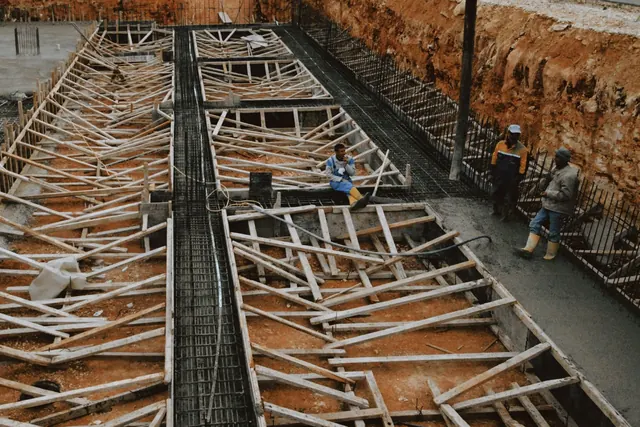
A soft-story seismic retrofit in Los Angeles costs about $60,000 to $200,000 for most buildings in 2026, with larger buildings running past $300,000. Engineering and permits add $10,000 to $25,000. Per unit that is roughly $5,000 to $20,000. Owners of rent-stabilized buildings can apply to recover up to 50 percent from tenants, capped at $38 per unit per month over 120 months.
- Typical building
- $60k to $200kPlus engineering and permits
- Per unit
- $5k to $20kFalls as unit count rises
- Recoverable
- Up to 50%$38/unit/month, 120 months
- Deadlines
- Already passedOrders went out 2016 to 2017
What it costs
| What | Typical Los Angeles range | Notes |
|---|---|---|
| Structural engineering and drawings | $9,000 to $20,000 | Required before anything |
| City permit and plan check | $3,000 to $7,000 | LADBS soft-story checklist |
| Steel moment frames, fabricated and installed | $26,000 to $46,000 each | Usually two to four of them |
| New concrete footings | $9,000 to $19,000 per frame | Cut, excavate, pour |
| Shear walls and connections | $7,000 to $30,000 | Where there is wall to work with |
| Tenant notice, phasing and protection | $3,000 to $20,000 | Scales with unit count |
| Patch, paint and restriping | $3,500 to $9,000 | Putting the parking back |
Work out your own number. The soft-story retrofit cost calculator gives you a line-item range for your project in under a minute.
Why the range is so wide
Because buildings vary more than any published figure suggests. A six-unit building with one open side and good clearance is a different job from a twenty-four unit building with subterranean parking open on three sides. The number of steel moment frames the engineer specifies is the single biggest driver, and you do not know it until the engineering is done.
Published figures from other sources range from $20,000 to over $500,000 for the same category of work, which tells you how little a single number means here. Get the engineering done first; it is a small fraction of the project and it converts a guess into a budget.
The deadlines, and where they stand
The City of Los Angeles adopted Ordinance 183893 in 2015 and issued Orders to Comply to identified buildings between May 2016 and October 2017. From the date of your order you had two years to submit plans, three and a half years to pull the permit, and seven years to complete the work and obtain a certificate of compliance.
That means every original seven-year window closed between May 2023 and October 2024. If you are holding an order you have not acted on, you are past due today, and the right move is to start the engineering this week rather than wait for enforcement to find you.
Getting half of it back
The Los Angeles Housing Department runs a seismic retrofit cost recovery programme for rent-stabilized buildings. Owners can apply to pass through up to 50 percent of the retrofit cost, divided equally among the rental units, capped at $38 per unit per month, amortised over 120 months and extendable until the approved amount is collected.
On a $140,000 retrofit of a twelve-unit building, that is up to $70,000 recoverable. It requires the department's approval and properly documented costs, which is why the documentation has to be built as the job runs rather than assembled afterwards. We prepare it as part of the work.
What the work is actually like for tenants
Better than owners expect. The work happens at the parking level and the ground floor. Units upstairs stay occupied throughout, and the frames go in without anyone entering a tenant's apartment in most buildings.
Parking is the real disruption. We phase it so only part of the lot is out at a time, and the sequence gets agreed with you before the notices go out. Most buildings keep most of their parking available for most of the job.
Other cities run their own programmes
Santa Monica, West Hollywood, Beverly Hills, Culver City, Pasadena, Glendale and Long Beach each have their own mandatory retrofit ordinances, their own building types in scope and their own deadlines. They are similar in shape and different in detail.
We work across all of them. The first step is the same everywhere: confirm what your city has actually ordered on your parcel, then work backwards from the date on it.
Los Angeles County figures, reviewed 2026-10-29 by America General Contractors, California contractor licence CSLB 1083262. Planning ranges, not a quote, and not legal advice. We confirm the current rules for your parcel before anything is drawn.
Questions
How do I find out if my building is on the list?
The city sends an Order to Comply to the owner of record, but orders go astray when ownership or mailing addresses change. If your building is wood-frame, two or more storeys, built before 1978 and has parking tucked under the units, assume it qualifies and let us check it against the city's records.
Can I sell the building instead of retrofitting?
You can, but the obligation runs with the property and buyers price it in, usually at more than the retrofit costs. Most owners find that completing the work and then selling nets more than selling with an open order against the title.
Does the retrofit disrupt rent collection?
No. Tenants stay, the units stay rented, and the only operational impact is parking, which is phased.
How long does the whole thing take?
Engineering and permits take two to four months. Construction is six to sixteen weeks depending on frame count. Budget six to nine months from first call to certificate of compliance.
Is it worth more than the compliance?
Yes, on two counts. A retrofitted building is materially less likely to be red-tagged after an earthquake, which protects the income stream. And insurers increasingly ask, with retrofitted buildings getting better terms.