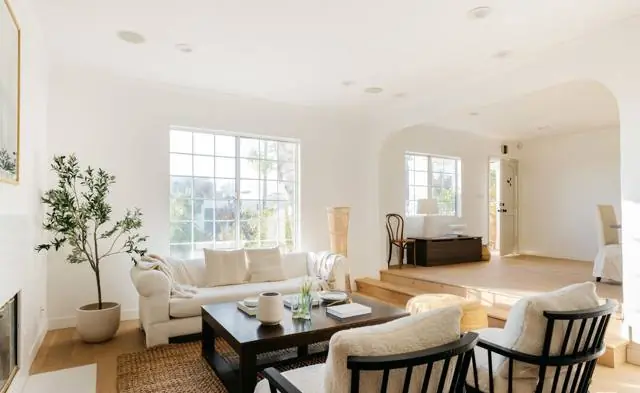
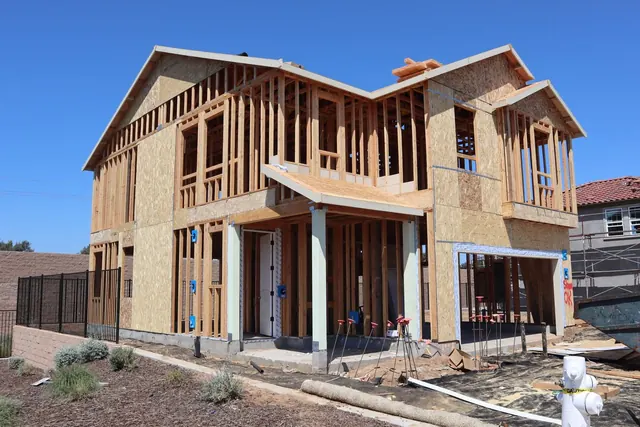
In Los Angeles, a gut remodel runs $300 to $600 per square foot and a new build runs $300 to $600 for builder-to-mid-custom quality, with custom work well above that. Once a remodel passes roughly 60 to 70 percent of rebuild cost, rebuilding usually wins on value, because you get new everything and no inherited problems. The catch is that rebuilding often means losing square footage current zoning will not let you rebuild.
Side by side
| Gut remodel | Tear down and rebuild | |
|---|---|---|
| Cost per sq ft | $300 to $600 | $300 to $600 builder to mid-custom |
| You keep | Footprint, often non-conforming | Nothing but the lot |
| Foundation | Existing, often needs work | New, engineered |
| Systems | New, threaded through old framing | New, designed in |
| Zoning | Existing non-conforming rights often preserved | Must meet current rules |
| Permit time | 3 to 8 months | 9 to 18 months |
| Property tax | Mostly protected under Prop 13 | Largely reassessed |
| Surprises | Many, behind the walls | Few, after the soils report |
| Build time | 6 to 12 months | 10 to 16 months |
The zoning trap that decides most of these
Many older Los Angeles houses are larger, closer to the property line, or taller than current zoning would allow. They are legal because they were built before the rules changed. That status usually survives a remodel and usually does not survive a demolition.
If your 2,400 square foot house sits on a lot where today's rules would only permit 1,900 square feet, tearing it down means rebuilding smaller. That single fact decides a lot of these arguments before cost even comes into it. Check it first.
When rebuilding clearly wins
- The foundation is failing and needs full replacement anyway
- The framing has significant termite, rot or fire damage
- The floor plan is unworkable and fixing it means moving most of the walls
- The house is small relative to what the lot allows, so rebuilding buys more space
- You want a basement, a different footprint, or a fundamentally different house
When remodelling clearly wins
- The house has non-conforming square footage, height or setbacks you would lose
- The structure and foundation are sound
- You like the house and want it fixed rather than replaced
- Proposition 13 protection on a long-held property is worth real money annually
- You need to be in sooner, since a remodel permits far faster than a new build
- The house is in a historic district where demolition is restricted or prohibited
The property tax piece people forget
Under Proposition 13, a remodel mostly protects your existing assessed value and only the new construction is added. A full teardown and rebuild is treated as new construction on a much larger scale, and the assessment moves accordingly.
On a property held for decades with a low assessed value, that difference can be many thousands of dollars a year, every year. It belongs in the comparison and is routinely left out of it.
The honest middle
There is a version of this where you keep the foundation and some framing, rebuild everything else, and add square footage. Done deliberately it is the best of both: non-conforming rights preserved, Proposition 13 largely intact, effectively a new house.
Done as a way of pretending a teardown is a remodel, it goes badly. The city has a view on how much of a building can be removed before it is a new building, and it is worth knowing where that line is before the demolition starts rather than after a stop-work notice.
Los Angeles County figures, reviewed 2026-10-29 by America General Contractors, California contractor licence CSLB 1083262. Planning ranges, not a quote, and not legal advice. We confirm the current rules for your parcel before anything is drawn.
Questions
At what point does rebuilding make more sense?
A rough rule is when the remodel would cost more than about 60 to 70 percent of rebuilding. But zoning, Proposition 13 and historic status all override the arithmetic, and on an older LA property they frequently do.
Is it cheaper to build new than to gut remodel?
Per square foot they are similar in Los Angeles. New construction has fewer surprises, which makes it more predictable even where it is not cheaper. The remodel's advantage is time, taxes and preserved zoning rights.
Can I demolish a house in a historic district?
Usually not without review, and often not at all if the house is a contributing structure. The preservation rules apply to demolition most strongly of all.
What about keeping one wall to call it a remodel?
This idea circulates and it does not work the way people hope. Cities evaluate how much of a structure remains, and a token wall does not preserve non-conforming rights or avoid reassessment on its own. Get a specific answer for your parcel before relying on it.
How do I decide?
Get three things first: a structural opinion on the foundation and framing, a zoning check on what current rules would allow, and your current assessed value. We will run both costs against those, and the answer is usually obvious once they are on the same page.
Related reading
- How much does a full home renovation cost?
- How much does it cost to build a house in Los Angeles per square foot?
- Does a remodel increase property taxes in California?
- What is an HPOZ and how does it affect remodeling?