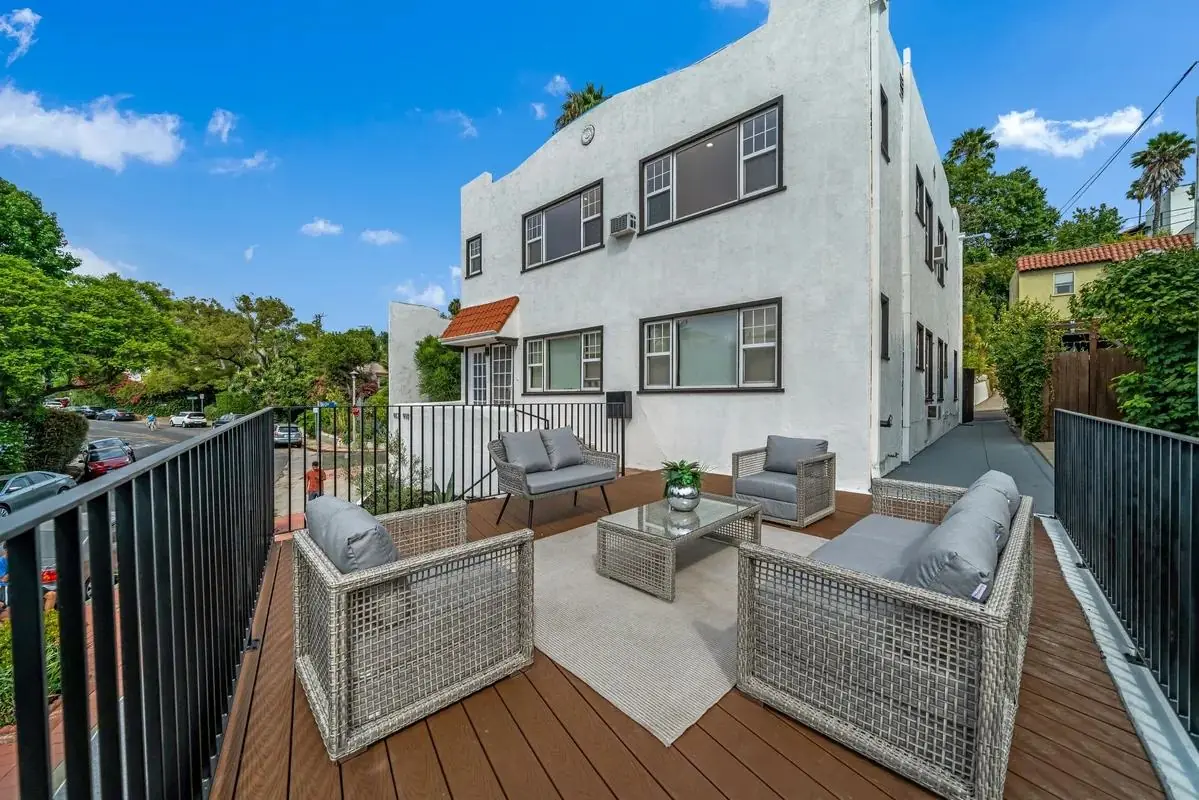
California requires owners of apartment buildings with three or more units to have wood balconies, decks, stairs and walkways inspected by a licensed professional. The first deadline was January 1, 2026 after a one-year extension, and it has passed. Condominium associations had until January 1, 2025 under SB 326 and did not get the extension. Rentals re-inspect every six years, condos every nine, and repairs identified must be completed within 120 days.
- Apartments, SB 721
- Deadline passedWas January 1, 2026
- Condos, SB 326
- Deadline passedWas January 1, 2025
- Re-inspection
- 6 or 9 yearsRentals, then condos
- Repair window
- 120 daysAfter a finding
What it costs
| What | Typical Los Angeles range | Notes |
|---|---|---|
| Inspection, small building | $1,200 to $3,000 | Per building, varies by element count |
| Inspection, larger building | $3,000 to $8,000 | More elements, more access |
| Minor repair, sealing and flashing | $2,000 to $8,000 | Per element |
| Structural repair of one balcony | $8,000 to $25,000 | Framing replacement, waterproofing |
| Full balcony rebuild | $20,000 to $45,000 | Including railings and finish |
| Non-compliance penalty | $100 to $500 per day | Enforced by the local building department |
What the law actually covers
Exterior elevated elements: balconies, decks, stairways, walkways and their railings, where they are more than six feet above ground and rely on wood or wood-based products for structural support. Concrete and steel elements are generally outside it.
SB 721 applies to buildings with three or more multifamily dwelling units and sits in Health and Safety Code section 17973. SB 326 applies to condominium common interest developments and sits in Civil Code section 5551. The two laws differ on who may inspect, how often, and what gets reported.
Who is allowed to inspect
For apartments under SB 721: a licensed architect, a licensed civil or structural engineer, or a contractor holding an A, B or C-5 licence with at least five years of relevant experience. For condominiums under SB 326 the list is narrower, limited to licensed structural engineers and architects.
The inspector cannot be the same party that then performs the repairs on a condominium project. On apartments the rules are less restrictive, but using separate parties is still the cleaner way to do it.
What happens if you missed the deadline
The deadlines have passed, so an owner who has not inspected is out of compliance now rather than at some future date. Local building departments enforce it, and the statute provides civil penalties in the range of $100 to $500 per day for continued non-compliance.
There are two larger exposures behind the fine. If someone is injured on an uninspected balcony, the failure to comply is close to handing the plaintiff a negligence case. And insurers have become noticeably more interested in whether this inspection exists, both at renewal and at claim time.
How we handle it
- We coordinate the inspection with a qualified inspector, or work from the report you already have
- Repairs identified get scoped, priced and scheduled inside the 120-day window
- Work is phased so tenants keep safe access to their units throughout
- We handle the permit, the inspections and the documentation that closes the file
- You get the report, the photos and the records your insurer and the city will ask for
On a building with repeated water damage at the same balconies, we will say so rather than patching it again. Recurring rot is a flashing and drainage problem, not a balcony problem.
Los Angeles County figures, reviewed 2026-10-29 by America General Contractors, California contractor licence CSLB 1083262. Planning ranges, not a quote, and not legal advice. We confirm the current rules for your parcel before anything is drawn.
Questions
My building has concrete balconies. Does this apply?
Generally not. The law targets elevated elements that depend on wood for structural support. Concrete and steel balconies are usually outside it, though the waterproofing on them still ages and still fails.
Does it apply to a duplex?
SB 721 applies to buildings with three or more units, so a duplex is outside it. A condo of any size can be inside SB 326 through the association.
What if the inspector finds something dangerous?
Conditions posing an immediate threat have to be addressed immediately, and the inspector is required to notify the owner and the local enforcement agency. The element usually gets taken out of service until it is repaired.
Can I pass the cost through to tenants?
On a rent-stabilized building in the City of Los Angeles, some capital improvement costs can be recovered through the housing department's pass-through programme, subject to approval and caps. Keep the documentation from day one, because it cannot be reconstructed later.
How long does the repair work take?
A sealing and flashing repair is a few days per element. A structural rebuild of a balcony is two to four weeks. The law gives you 120 days from the finding, which is usually enough if you start when the report lands rather than when the window closes.