What you are allowed to build
On a single-family lot, state law requires cities to allow one ADU plus one junior ADU of up to 500 square feet inside the house. A city cannot cap ADU size below 850 square feet, or below 1,000 square feet for a unit with more than one bedroom, and an 800 square foot unit with 4-foot side and rear setbacks is protected from lot-coverage and floor-area rules entirely. On a lot with an existing apartment building, you can convert non-livable space into ADUs up to 25 percent of the existing unit count, and add up to eight detached ADUs capped at the number of units already there.
Cities cannot require you to live on the property. That ban is now permanent for ADUs. For a junior ADU, owner-occupancy can still be required only where the junior unit shares a bathroom with the main house. California ADU law was also recodified in 2024 and now sits at Government Code sections 66310 through 66342, so anything you read citing section 65852.2 is quoting repealed law.
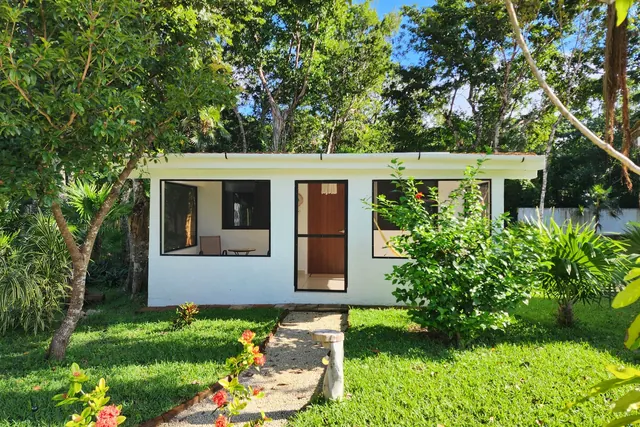
- Detached new ADU: a freestanding unit, 4-foot side and rear setbacks, at least 16 feet of height allowed (18 feet near transit or on multifamily lots).
- Garage conversion: reuses the existing structure, keeps existing setbacks, no replacement parking required.
- Attached ADU: an addition with its own entrance, often allowed to a higher height limit.
- Junior ADU: inside the existing house, efficiency kitchen, may share a bathroom, owner-occupancy required.
What it costs
All-in budgets in Los Angeles County, including plans, engineering, permits, fees, utilities and construction:
| Project type | Typical size | Typical all-in range |
|---|---|---|
| Junior ADU | Up to 500 sq ft | $60,000 to $120,000 |
| Garage conversion | 350 to 400 sq ft | $120,000 to $150,000 |
| Detached ADU | 400 to 500 sq ft | $150,000 to $200,000 |
| Detached ADU | 600 to 800 sq ft | $200,000 to $250,000 |
| Detached ADU | 800 to 1,000 sq ft | $250,000 to $300,000 |
| Detached ADU | 1,000 to 1,200 sq ft | $300,000 to $350,000 |
| Detached ADU, two-story | Up to 1,200 sq ft | $350,000 to $400,000 |
The costs that surprise owners are utilities: sewer connection or upsizing, electrical panel upgrades and separate meters, and trenching. We walk the site for these before pricing.
Permits and timeline
The city has 15 business days to tell you whether your application is complete and 60 days after that to approve or deny it. Real timelines run two to four months once correction cycles are counted. A custom detached ADU commonly takes 8 to 14 weeks for a first review and a garage conversion 6 to 10 weeks, while a pre-approved standard plan can come back in 3 to 10 business days.
One more thing worth knowing: in November 2024 the state housing department formally found the City of LA's ADU ordinance out of step with state law in 17 respects, including omitting the 18-foot height allowance and imposing an owner-occupancy requirement the state has since banned. Where the two conflict, state law governs.
- Feasibility and parcel review: 1 to 2 weeks
- Drawings, energy-code report and engineering: 4 to 8 weeks
- Plan check and permits: 2 to 4 months
- Construction, garage conversion: 3 to 5 months
- Construction, detached unit: 5 to 8 months
- Utility meters and final inspection: runs in parallel, sometimes the last item
Rent, taxes and financing
One-bedroom ADUs in central and westside neighborhoods commonly rent in the low-to-mid $2,000s or above. The new construction is added to your property tax assessment at its value (roughly 1.1 to 1.25 percent per year), while your existing home keeps its Proposition 13 base. Common financing options are HELOCs, cash-out refinances, renovation loans and construction loans; we provide the cost documentation lenders need.
Mistakes to avoid
- Designing before confirming sewer and electrical capacity
- Skipping the energy-code report and collecting corrections for it
- Choosing the cheapest plans and paying for it in change orders
- Assuming short-term rental is allowed. It is restricted for ADUs, and junior ADU rentals must run longer than 30 days
- Starting construction before the permit is issued
Los Angeles County figures, updated 2026-10-29. Planning ranges, not a quote, and not legal advice. Rules change, so we confirm what applies to your property before design.
Related questions
- How much does an ADU cost in Los Angeles?
- Can I build an ADU on my property in Los Angeles?
- What are the ADU setback and height rules in Los Angeles?
- What permits do I need for an ADU in Los Angeles?
- What is a junior ADU (JADU)?
- How much does it cost to convert a garage to an ADU?